I grew up in a Boston suburb, with a nationally ranked school system. And I learned all the basics of U.S. history.
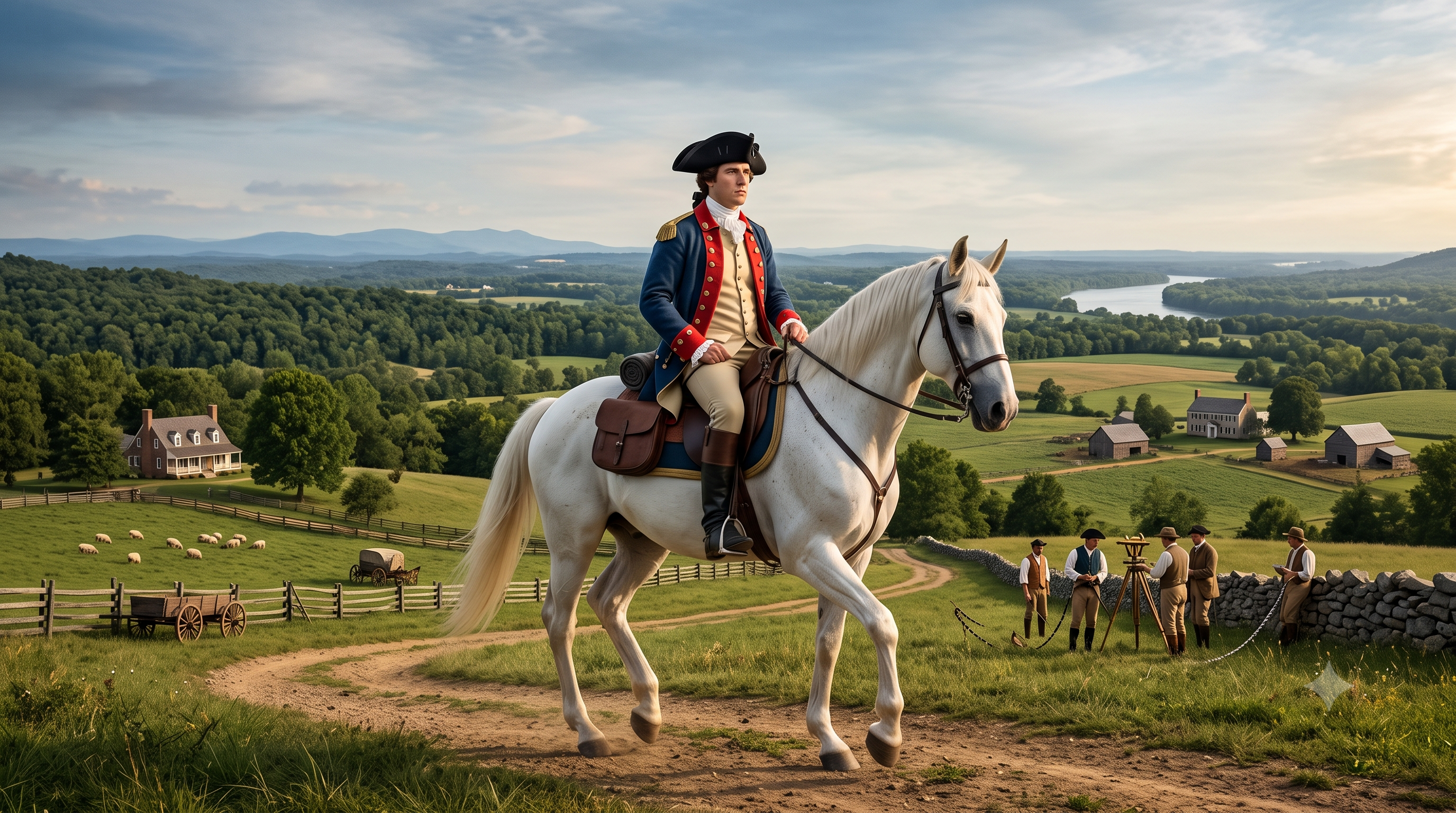
But, with gaps in my education and memory, I’ve decided to learn more in this 250th year of our nation. One way to do it was to see the “Young Washington” movie at the JFK Library during a special showing. I didn’t care who wrote or produced the movie. (It was Angel Studios known for religious movies including Trump favorite “Sound of Freedom,” a 2023 box office winner about a hero who saves children from sex trafficking). While I am an independent leaning Democrat, and the movie could be viewed as patriotic, that didn’t bother me in the least.
It was appropriate and exciting that I saw a movie about our first president at the JFK library because President John Kennedy was the first president who I remember. Some of Washington’s qualities I could relate to with Kennedy: a military leader who had ambition, resolve and clear thinking in difficult times, and a strong desire for public service. I’ve been recommending this movie to friends and family because it tells us what we didn’t know about one of the most important figures in our country’s founding and humanizes Washington instead of framing him as mythical figure of unlimited power.
I knew Washington was a great general and our first president but I was sure that I knew nothing about his early years. I was right.
Minutes into the movie, I learned that his father died when he was a boy. He wanted to go to school but he wasn’t high society enough and also needed to work on a large farm to support his family. He was self-taught reading books with an assist by his half-brother.
Washington’s life is marked by twists of fate where his life could’ve been totally different, most notably surviving battles as part of the movie set in the French and Indian war of 1755. What if he hadn’t been able to convince the Virginia lieutenant governor that he could make his way on a treacherous route to the Ohio Territories to speak with a tribe that hated the French? Washington took the assignment for no pay because he was only an officer in the colonial militia and would be paid less than a British officer. His goal was to become a British officer. If he succeeded, it’s possible the revolution may never have happened.
The movie showed Washington’s evolution from an inexperienced soldier to a more mature leader who applied what he learned in future battles (leading from the front and hiding behind trees instead of standing in lines as easy targets which the British did often). At one point, a native American said the tribe had tried to kill Washington but he escaped a few times. One scene stood out as hard to believe when he rode his horse in the middle of intense gunfire and emerged unscathed.
After the JFK screening, a panel of historians and the movie producer, emphasized that it was important to show that Washington made mistakes, but he learned from them. He was sometimes dismissed as too young in his early 20’s but that didn’t discourage him.
I asked one of the historians, how could they know what was said and done hundreds of years ago? I was told that it’s all available online. Writings and correspondence by seven founders including Washington, Thomas Jefferson, and Ben Franklin were posted 13 years ago.
According to the movie-review site Metacritic, the critical reception for “Young Washington” has been mixed. Nonetheless, it was the third most popular movie in its opening July 4 weekend at $20.8 million and has already sailed north of $30 million in box office revenue. It reportedly cost $20 million to produce, a pittance considering the appearance of box office stars like Kelsey Grammar and Ben Kingsley. (Washington was played by a relative unknown.) A sequel is reportedly in the works. Count me in on attending opening night.
Howard Sholkin worked in media companies for half of his 42 year career. The other half, he served in marketing communication at tech product and services companies.